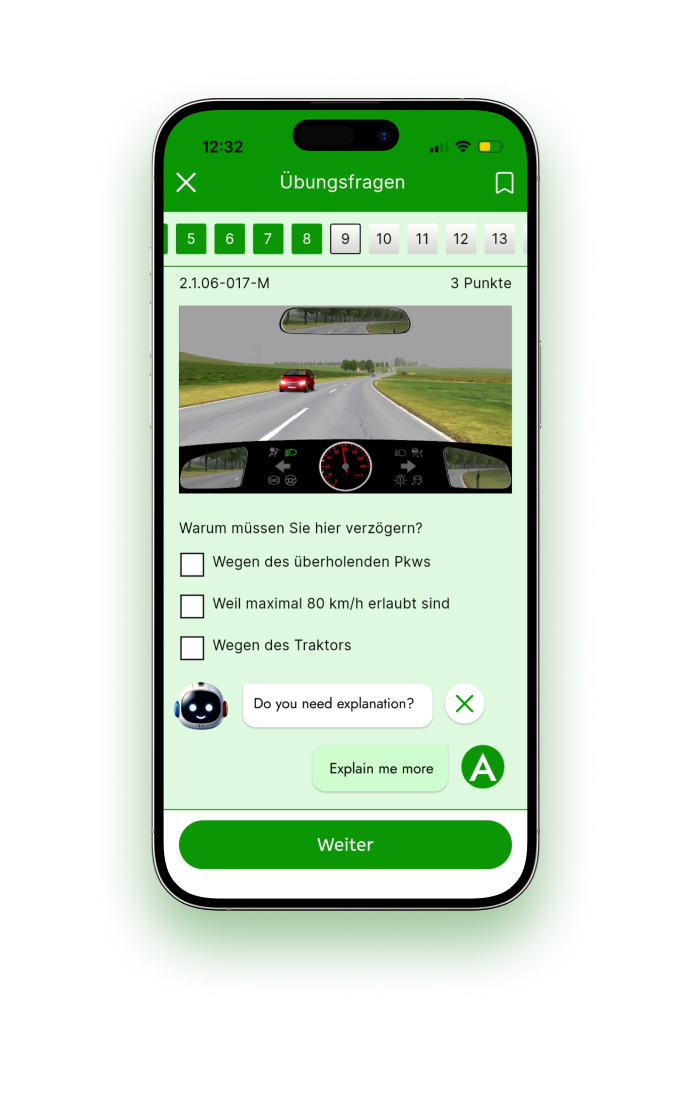
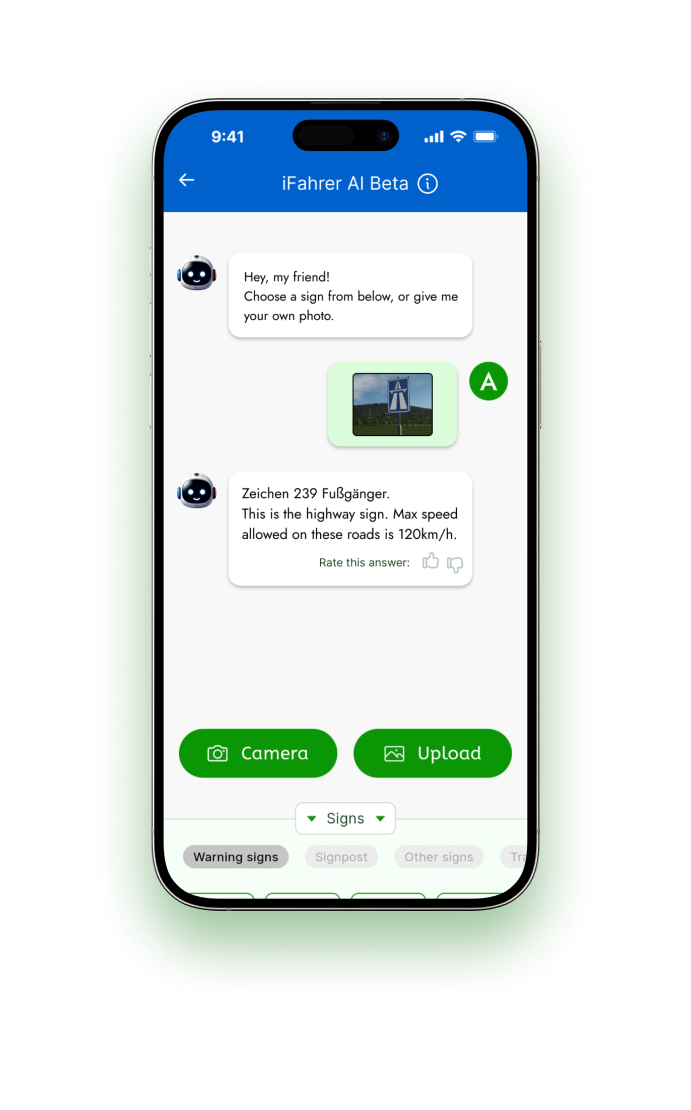
Get ready for your license test with AI assistance!
What should be noted when using a seatbelt?
The seatbelt should not be twisted
Once you have put it on, the seatbelt should be pulled tight
A damaged seatbelt should be replaced
Here is Our AI Assistant's Explanation
All three points are important because a seatbelt only protects properly when it fits correctly and can hold full crash forces.
Answer 1 is correct: If the belt is twisted, it lies on your body with a smaller contact area. In a crash that increases pressure on your ribs and abdomen and can cause more injuries. A twist can also stop the belt from running smoothly through the guide and retractor, so it may not tighten as intended.
Answer 2 is correct: The belt should be snug and lie flat against your body. If it’s too loose, you move forward farther before the belt restrains you, which increases the risk of hitting the steering wheel/dashboard and increases injury risk. A tight, close fit also helps the belt and any pretensioner system work effectively.
Answer 3 is correct: Any damage (cuts, fraying, burn marks, deformation, faulty buckle, or belt that doesn’t retract/lock properly) means the belt may tear or fail under load. In German traffic safety practice and inspections, a defective restraint system must be repaired or replaced; you should not keep using a damaged belt.
Rule of thumb for similar questions: Wear the belt low across the pelvis (not the stomach), the shoulder part across the middle of the shoulder and chest (not under the arm or behind the back), keep it flat and snug, and never use it if it’s damaged or not functioning properly.